

Most kitchens end up with one sponge doing every job. It wipes the counter, scrubs the pan, then wipes the counter again. That's how a sponge goes bad in a week.
The fix isn't a bigger shopping list. It's matching the tool to the mess. Cloths, sponges and brushes each do one thing well, and each one fails in its own way if you ask too much of it. Here's what to use for what, with real prices and honest limits.
Short version: a cloth for wiping, a sponge for soft jobs like glasses, a loofah or brush for scrubbing. Keep the wet, grubby stuff away from the clean wiping. That's most of it.
What to use for what
| Tool | Price | Best for | Skip it if |
|---|---|---|---|
| Bamboo Fiber Dish Cloths | $6.99 | Spills, quick counter wipes, drying a plate | You need to scrub burnt-on food |
| Bamboo Fiber Cleaning Cloth | $9.99 | Counters, appliances, big wipe-downs | You want a 100% plant-fiber cloth |
| Compostable Kitchen Sponges | $6.99 | Glasses, mugs, light dish duty | You can't let it dry between uses |
| Natural Loofah Sponge, 3-Pack | from $12.02 | Pots, pans, stuck-on food | You hate replacing things every few weeks |
| Bamboo Dish Brush | from $15.27 | Heavy pans, sinks, stovetops | You're washing nonstick or fragile glass |
Dish cloth: the wiper
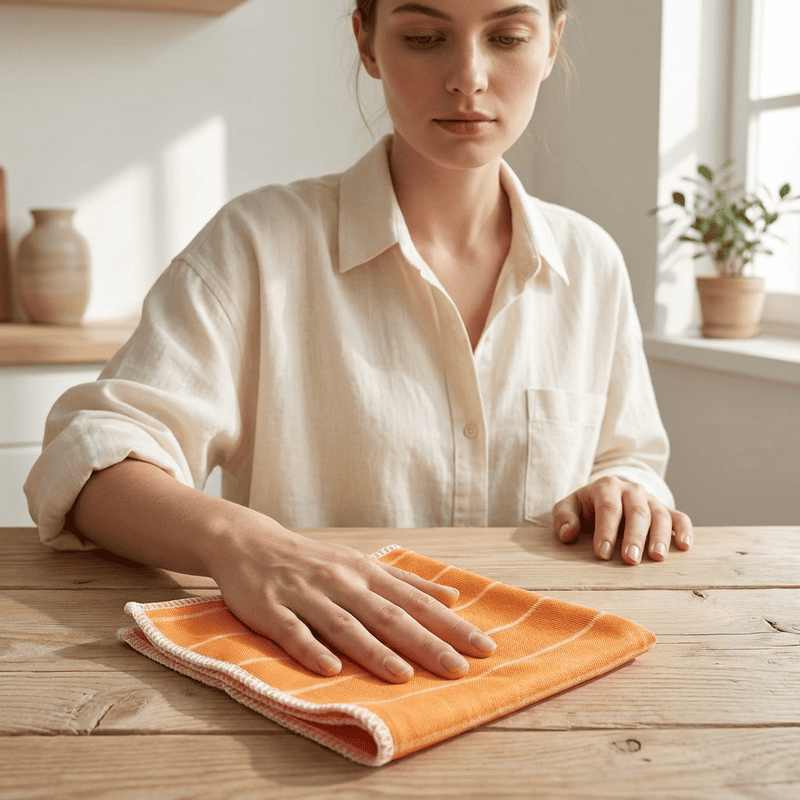
A dish cloth is a small, washable cloth for wiping, rinsing and drying. It's for wiping, not scrubbing. That's the job a paper towel usually does, and a paper towel gets thrown out after one wipe. Environmentally friendly cleaning cloths are the easiest swap in the kitchen, because nothing about how you use them changes.
The Bamboo Fiber Dish Cloths are small, about 23 by 18 cm, and made of superfine bamboo fiber. They're $6.99 and come in six colors. Small is the point. You can wipe a spill, rinse it out and be done in ten seconds.
For bigger surfaces, the Bamboo Fiber Cleaning Cloth is 50 by 40 cm and $9.99. Here's the honest part. It's a blend of bamboo fiber and microfiber, and the listing puts the bamboo at roughly 18%. So it's reusable and washable, but it isn't plastic-free. If that matters to you, get the dish cloths instead. If you mostly want to stop buying paper towels, the blend does that fine.
Care. Machine wash both. Skip fabric softener on the larger cloth, since the listing warns it can cut absorbency over time. Hang them to dry. A damp cloth balled up in a corner of the sink is the one habit that will make them smell.
Where it falls short. A cloth won't scrub dried oatmeal off a pot. Don't ask it to.
Sponge: the soft-job tool
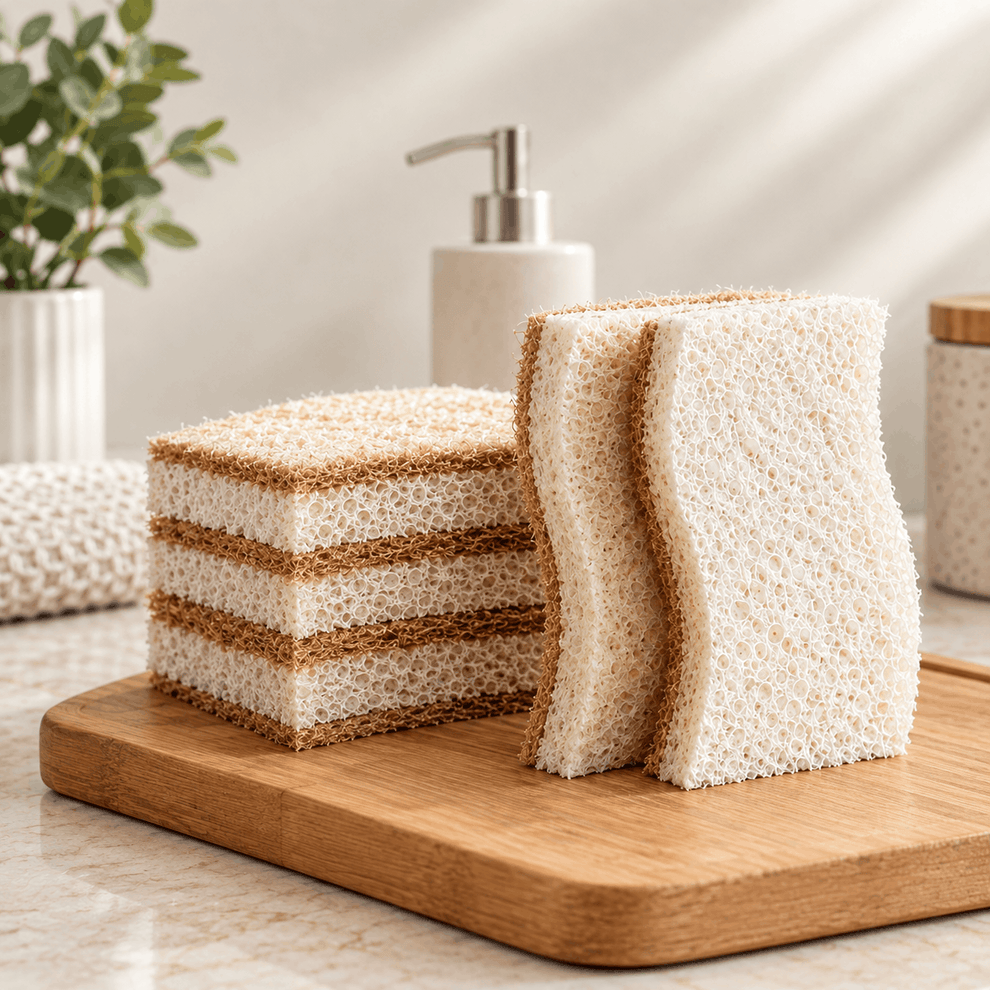
A cellulose sponge is a soft, absorbent pad. It's good at a short list of things: glasses, mugs, plates, anything that needs soap and a gentle pass. The Compostable Kitchen Sponges are $6.99 and made of coconut palm cellulose, so they're plant fiber, not the synthetic kind.
Now the unglamorous bit. Sponges hold water, and water holds bacteria. A 2017 study in Scientific Reports looked at used kitchen sponges and found bacteria spread throughout them, in densities up to 54 billion cells per cubic centimeter. It also found that sponges their owners said they regularly sanitized did not contain fewer bacteria than the rest. Two of the ten most common bacteria types showed up in higher proportions in the sanitized ones. The authors questioned those cleaning methods over the long term.
That study looked at ordinary used kitchen sponges, not ours. But the lesson carries over. Here's the routine we'd follow:
- Squeeze the sponge out after every use.
- Stand it up where air can reach it, so it dries between uses.
- Replace it when it smells or starts to fall apart. Don't keep one for months.
The upside of cellulose: the listing says it breaks down instead of building up. Check what your local compost program accepts before you toss it in.
Where it falls short. A cellulose sponge is soft. It won't handle a baked-on casserole, and it's the tool most likely to get left wet in the sink.
Loofah: the scrubber that dries fast
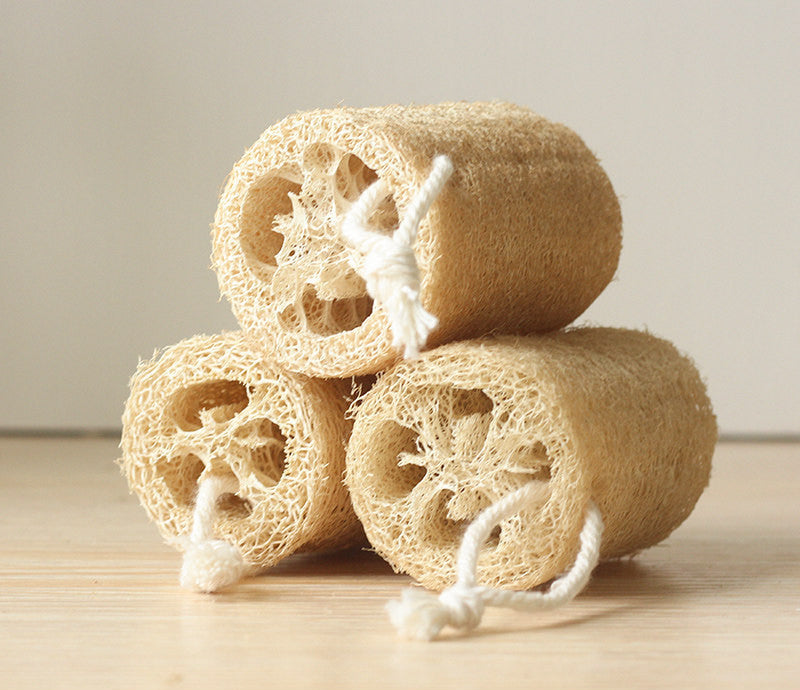
A loofah is a scrubber made from dried luffa plant fiber. For pots and stuck-on food, it's a better answer than a scouring pad. The Natural Loofah Sponge, 3-Pack is real loofah plant fiber, dried and cut, and prices start at $12.02 depending on the pack size you pick.
It's rough when dry and softens when wet. That's normal. It also dries out quickly between uses, which is the whole advantage over a cellulose sponge that stays damp.
Care. Rinse after each use, wring it out and hang it up. The listing says to replace it every few weeks with regular use. So yes, it's a recurring purchase. That's why the 3-pack exists.
One mix-up to avoid: the Natural Loofah Sponge for the shower is a separate product. Don't promote your bath loofah to dish duty. Different job, different shelf.
Brush: for what's actually stuck
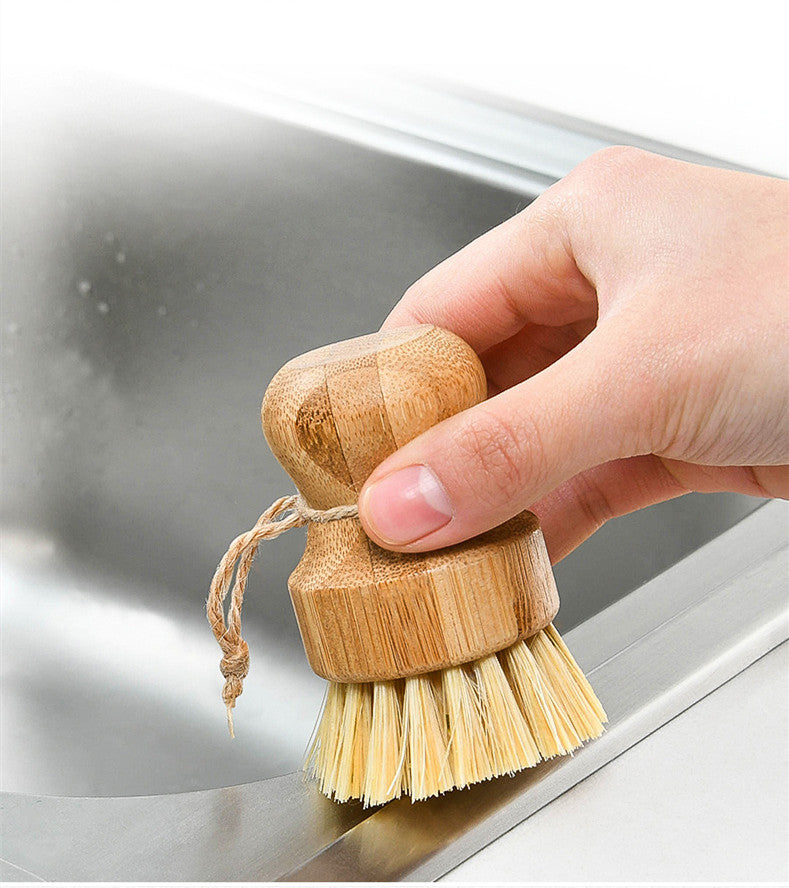
A dish brush is a handled brush with stiff bristles, and it's the heavy hitter. The Bamboo Dish Brush has a round bamboo handle and sisal or coconut palm bristles. It's $15.27 in brown or $18.48 in natural wood color. The listing says it works on pans, sinks and stovetops.
Natural fiber bristles scratch. That's what makes them work. It also means we'd keep them off nonstick pans and anything delicate, which is our own advice, not a claim from the listing.
Care. Rinse, shake it out and let it air dry bristle-side down. No soaking, no dishwasher.
Where it falls short. It's overkill for a wine glass, and the listing doesn't give a lifespan, so we won't invent one. When the bristles go flat, replace it.
A quick word on beeswax wraps
The Beeswax Food Wrap isn't a cleaning tool, but it lives in the same sink. It's $20.17 for a three-size set. The care rule is the opposite of your pots: cold water, mild soap, air dry. Hot water melts the wax. So wash the wraps with a clean cloth, not the one that just did the roasting pan.
The cost math
These are scenarios, not lifespan data, so adjust for your kitchen.
- Paper towels to cloths. A dish cloth is $6.99 and gets washed instead of thrown out. Every roll of paper towels you don't buy is money back, and the only ongoing cost is laundry.
- Sponge habit. Replace a $6.99 sponge every two weeks and that's 26 a year. Dish duty split between a sponge and a loofah means fewer of each.
- Brush. At $15.27, it costs more up front than a sponge. It pays back only if it replaces a lot of the scrubbing your sponge was doing, and the listing doesn't say how long the bristles last.
None of this is a savings plan. It's a swap that costs about the same and makes less trash.
If you're starting from zero
Buy two things first: dish cloths and a loofah 3-pack. Keep your old sponge for the soft jobs until it's finished, then replace it with the cellulose one. Add a brush if you find yourself fighting a pan every week.
That's it. Nothing needs to be perfect on day one. If you want more ideas, we also wrote about biodegradable scrubbing pads, dish brush alternatives and a zero-waste kitchen starter kit.
Anyway, it's all in the Eco-Friendly Cleaning collection if you want it. Curious which of these you actually reach for first.
Sponge study: Cardinale et al., Scientific Reports, 2017. Cover photo by RDNE Stock project on Pexels.